- tel:+86-13222111178
- email:info@ntjugao.com



Operating Procedures for Profile Bending Machines
Operating Procedures for Profile Bending Machines

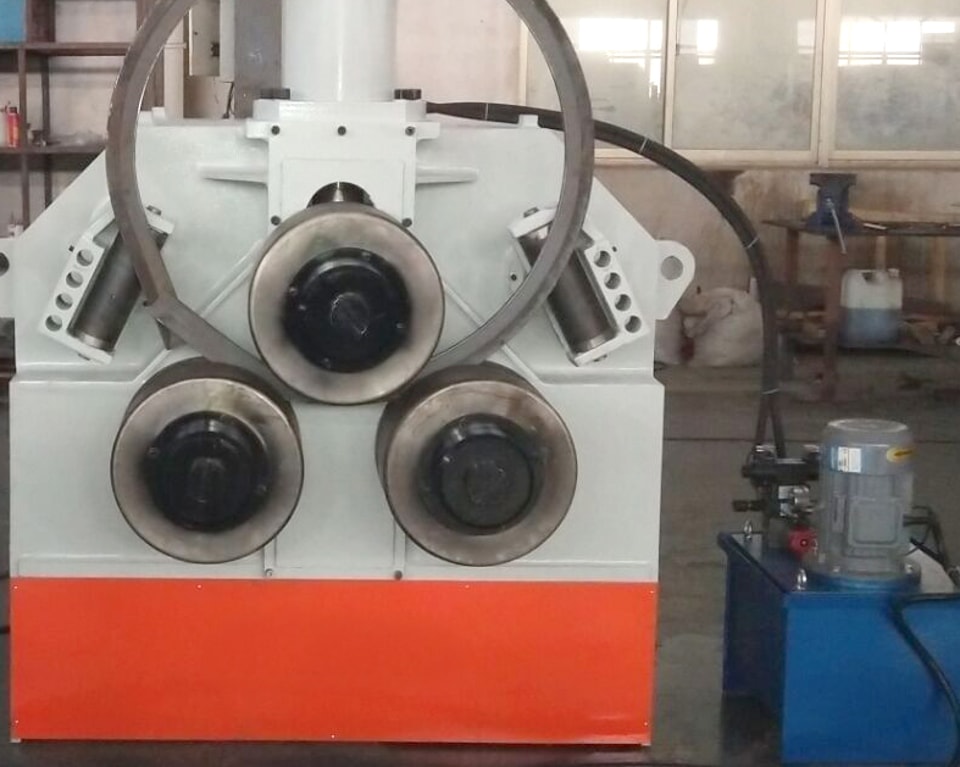
A profile bending machine is a specialized machine for bending metal profiles (such as angle steel, channel steel, I-beams, round tubes, square tubes, flat steel, etc.). It applies controllable bending force to the profile through mechanical transmission or hydraulic drive, shaping it into specific shapes (such as arcs, right angles, S-bends, etc.) according to preset angles or curvatures.
Profile bending machines are widely used in building steel structures (such as curtain wall framing, bridge supports), machinery manufacturing (such as equipment frames, pipe elbows), the automotive industry (such as chassis components), furniture and decoration projects (such as curved decorative strips), and other fields. They are key equipment for processing non-linear shapes of metal profiles.
Functions of Profile Bending Machines
Profile bending machines, through mold positioning and pressure control, can precisely set the bending angle, radius, and length segments to meet the processing needs of complex three-dimensional shapes. They also support continuous production, improving the efficiency and consistency of profile forming.
Depending on the driving method, common types include mechanical (driven by a motor and reducer), hydraulic (using hydraulic cylinders to provide pressure), and CNC fully automatic (controlled by a program to adjust angle and speed). CNC models can automate the processing of complex curves and are suitable for high-precision customized applications.
Operating Procedures for Profile Bending Machines
I. Pre-Operation Preparation
Equipment Inspection
Check that all machine components (such as the frame, transmission mechanism, and die holder) are securely fastened. Ensure the hydraulic system (if a hydraulic model) has the correct oil level (above the center line of the oil level gauge) and that there are no leaks in the pipelines.
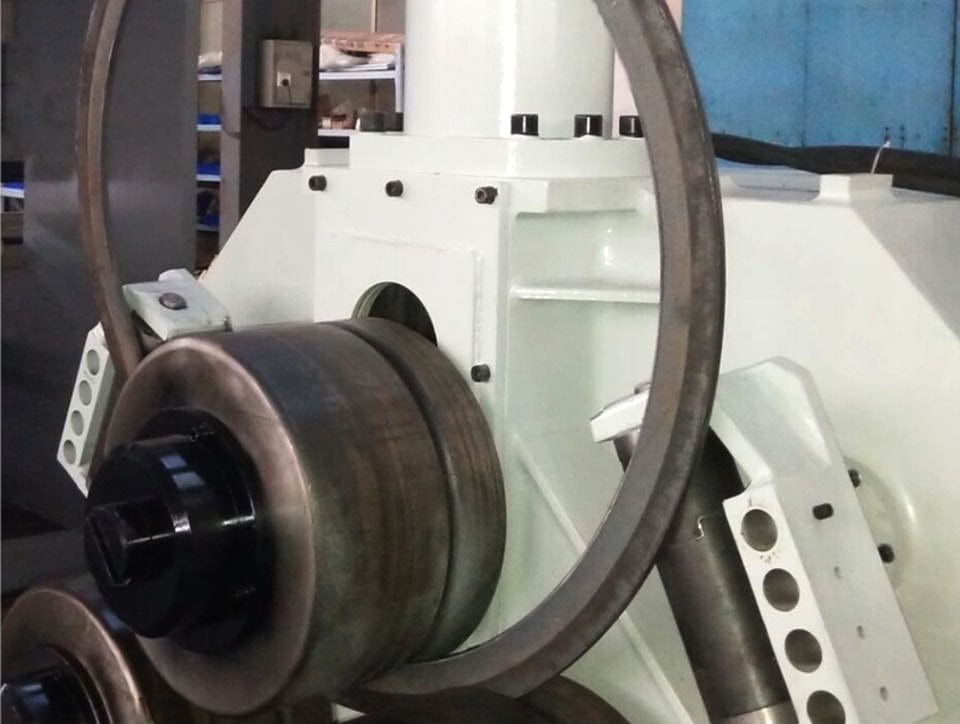
Confirm that the specifications of the bending dies (such as bending dies, clamping dies, and mandrels) match the profile to be processed (e.g., for round pipe bending, a bending wheel die of the corresponding diameter is required). Ensure the die surface is free of cracks and excessive wear (wear depth > 1mm requires replacement).
Clean the worktable and dies of debris (such as metal shavings and oil stains) to avoid scratching the profile surface or affecting positioning accuracy.
Parameter Settings
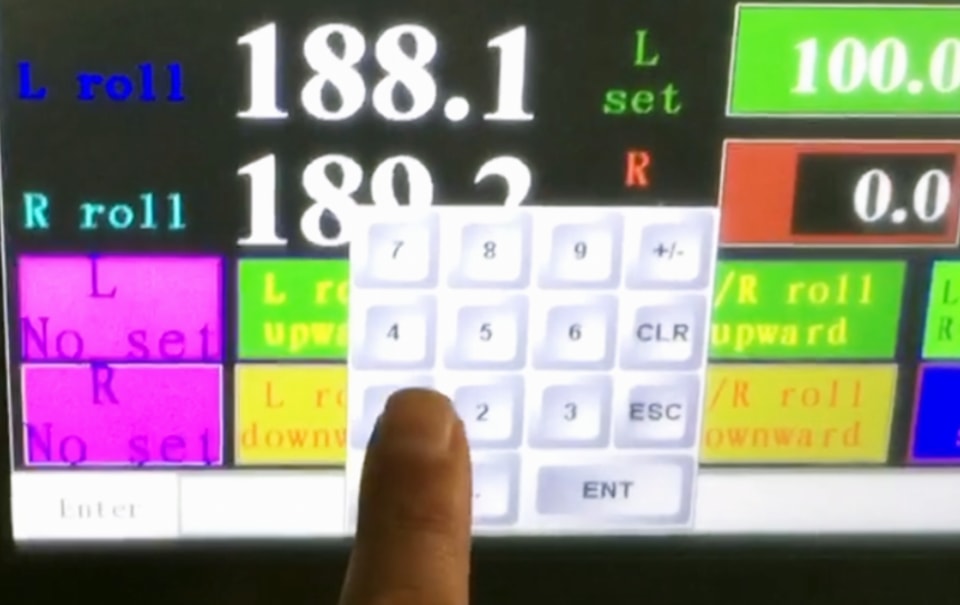
Based on the profile material (e.g., Q235 steel, stainless steel), cross-sectional shape (e.g., square tube side length, round tube diameter), and target bending angle/radius, consult the equipment manual or process documents to set a reasonable bending speed (usually 5°-30°/second) and pressure parameters (avoid overload). For CNC models, the machining program (including bending sequence and angle compensation values) must be input in advance. During debugging, a no-load test run should be performed first to verify the coordination between the program logic and the mold movements.
Profile Pre-treatment
Check whether the dimensions of the profile to be processed meet the tolerance requirements (e.g., length deviation ≤ ±2mm), and whether there is severe rust or deformation on the surface. For easily deformable thin-walled profiles (e.g., aluminum square tube wall thickness < 2mm), a small amount of lubricating oil (e.g., graphite emulsion) should be applied to the bending area or a special mandrel support should be used to prevent inner wrinkles or breakage.
II. Operating Procedures
Clamping and Fixing: Place the profile in the die positioning area of the bending machine. Securely clamp one end of the profile using the clamping die (or pressure device) (clamping force should be uniform to avoid localized indentations), ensuring the profile axis is aligned with the bending centerline (deviation ≤ 1mm). For long profiles (> 2m), use an auxiliary support frame (such as a roller bracket) to prevent sagging due to its own weight, which could cause the bending position to shift.
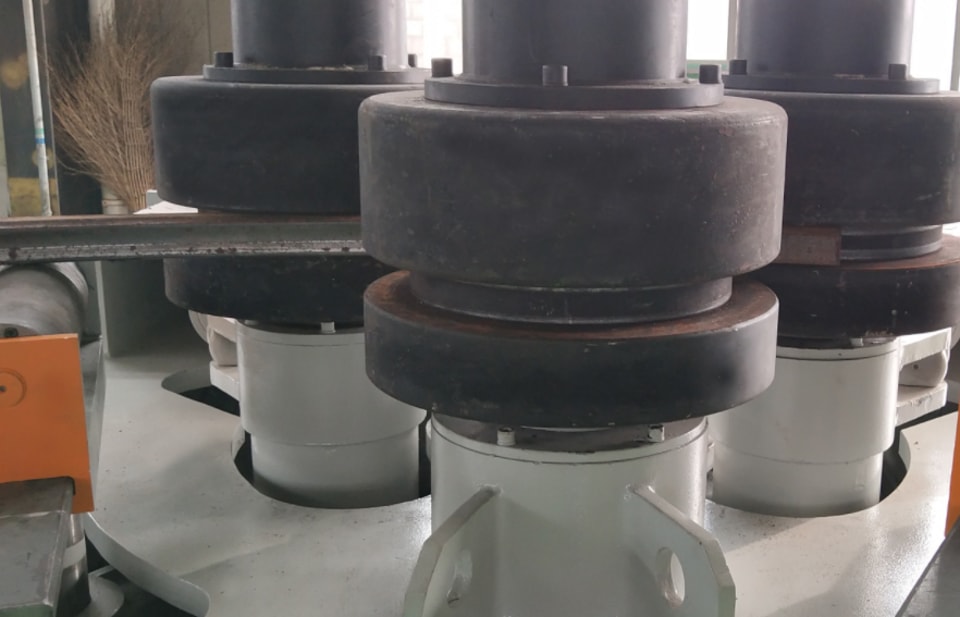
Starting Bending: After confirming that the safety devices (such as protective covers, emergency stop buttons) are in effective condition, start the equipment. For manual machines, gradually apply pressure using the operating handle, observe the profile bending process, and adjust the angle in real time. For CNC machines, operate automatically according to program instructions. The operator must monitor the pressure and angle feedback values displayed on the screen and immediately stop if any abnormalities are detected (such as sudden pressure changes or excessive angle deviation).
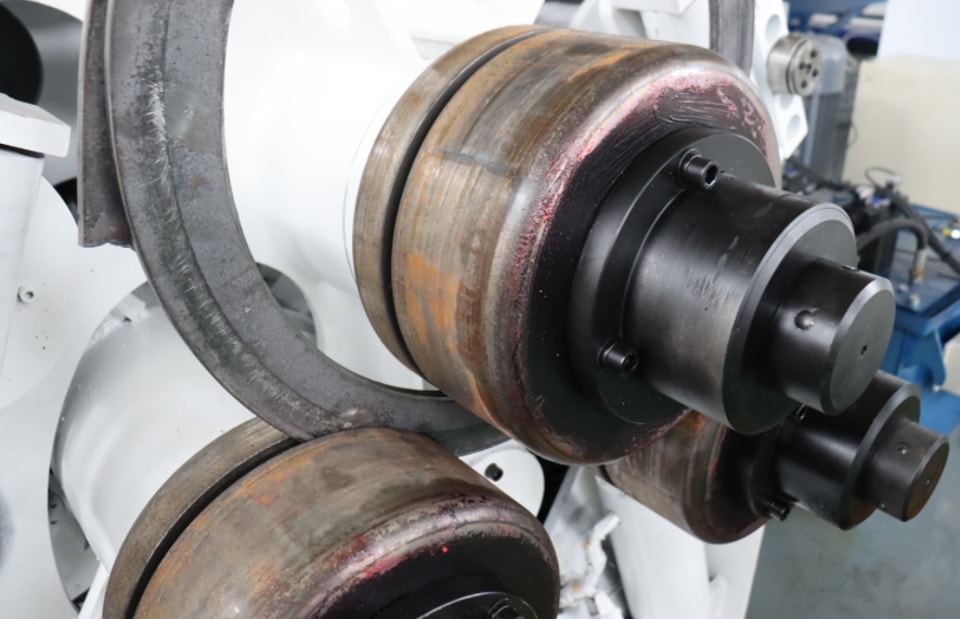
Process Monitoring: During bending, close attention must be paid to the deformation state of the profile. If thinning of the outer wall, wrinkling or cracking of the inner wall (such as fine cracks in stainless steel profiles) occurs, stop immediately and check the die clearance, pressure parameters, or profile material. When bending multiple sections continuously, each angle must be completed step-by-step according to the preset sequence to avoid cumulative errors caused by multiple angles being stacked at once.
Unloading and Inspection: After bending is complete, release the clamping die and use lifting tools (or manual assistance) to smoothly remove the profile, avoiding collisions with the formed parts. Use an angle gauge, radius gauge, or 3D measuring instrument to check the actual bending angle and radius, compare it with the design requirements, and rework any defective products.
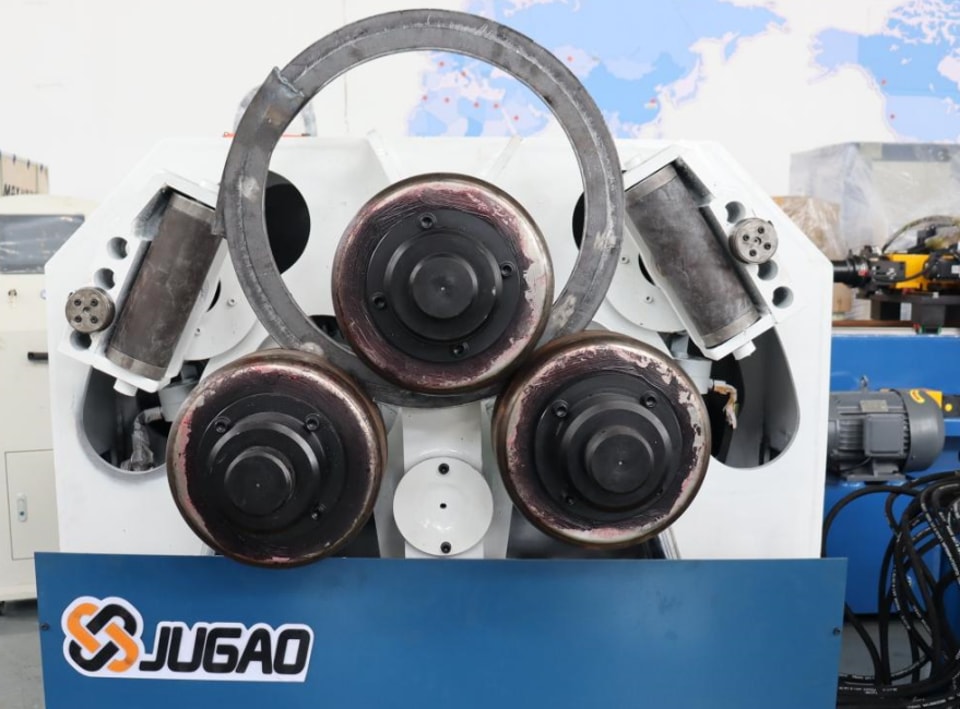
In summary, the profile bending machine is an important tool in the metal processing field for converting straight lines to curves. Its correct use depends on standardized preparation procedures, precise operation control, and strict safety maintenance. Operators must be familiar with the equipment performance and profile characteristics, and strictly follow the regulations to operate the equipment to ensure safe production and efficiency.